Jack Parker
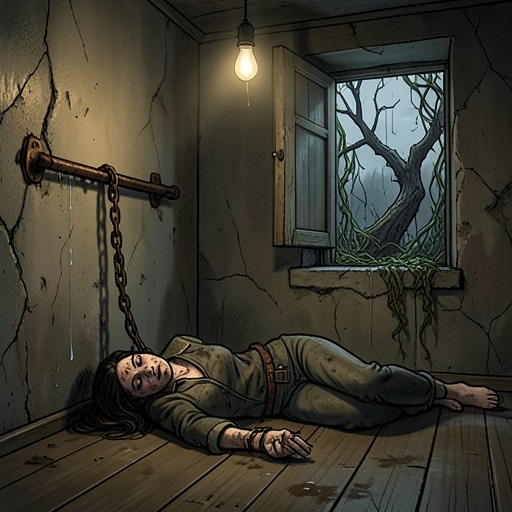
The ThicketJack Parker is the novel’s sixteen-year-old narrator, orphaned by the Hinge Gate smallpox epidemic and forced into adulthood by the disappearance of Lula Parker. His decisive significance lies in the double position he occupies: he is young enough to be astonished by the world’s cruelty, yet responsible enough to pursue his sister through it. His journey joins a rescue plot to a larger education in inheritance, race, violence, property, and the unreliable shaping power of memory.
Identity and Background
Jack Parker first appears as a healthy sixteen-year-old whose life has been broken open by smallpox. The disease passed over him and Lula Parker, but killed both their mother and father after fever, blisters, and suffocation. Because the children could not touch their dying parents without risking infection, Jack’s first defining experience is helpless witness: he survives physically while being denied the ordinary acts of care and mourning. Their parents are buried in coffins filled with lime, a detail that later makes the family property itself seem dangerous to him.
The epidemic also destroys the local structure on which Jack might have relied. Hinge Gate is under quarantine, with armed guards at both ends, so the law is inaccessible precisely when he needs it. Jack therefore asks strangers to take him to Sylvester, a town that is not quarantined, despite having no money to offer. He gives his name first as Jack and later, when identifying himself formally, as Jack Parker. The movement from a single name to the family name marks his effort to recover authority through lineage even as that lineage has become materially and morally unstable.
Jack inherits two pieces of land: his grandfather’s old one-hundred-acre place and his parents’ twenty-five-acre farm, the latter considered better farmland. He initially treats the property as a resource that might finance Lula Parker’s rescue, but the land soon becomes more than an estate. It is the remnant of a family destroyed by disease and violence, and the basis on which Jack must negotiate with people outside his former social world.
Life and Plot Trajectory
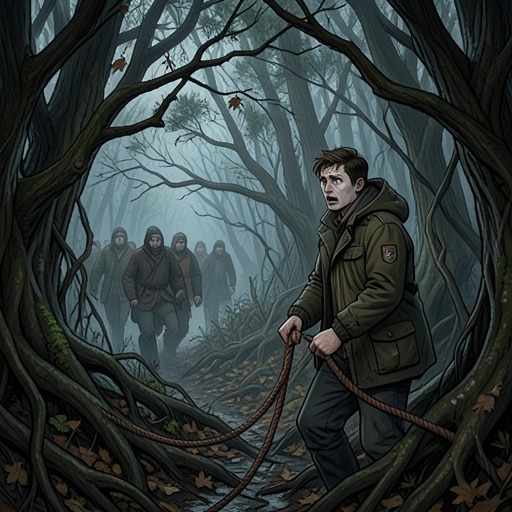
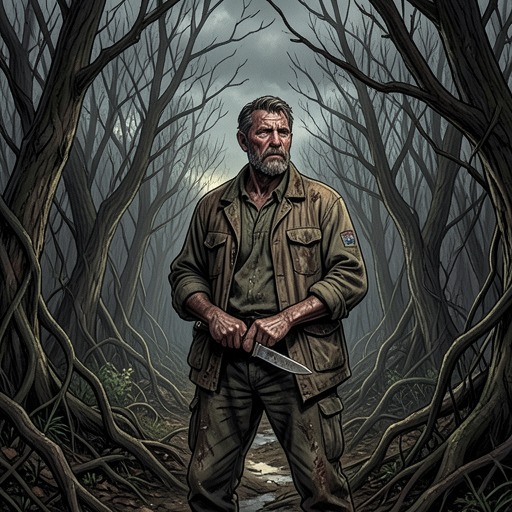
Jack’s objective is direct and urgent: rescue Lula Parker before time runs out. Yet he cannot accomplish it alone. He meets Eustace Cox, a tracker and grave digger who identifies himself as a possible relative, and is brought into contact with Shorty. Their partnership becomes an improvised substitute family, formed not by respectability or institutional protection but by shared danger and mutual dependence.
The social meaning of that partnership is established through Eustace Cox’s account of his ancestry. Eustace explains that a Cox man, roughly forty-five years earlier, fathered him with a woman who was Black and Comanche, against her will, making the two men possible relatives. Jack’s response is practical rather than sentimental: he does not pause over the insult or the genealogy because Lula Parker remains the immediate priority. The revelation nevertheless forces him to recognize that the family name he inherited is entangled with slavery, sexual violence, and racial power rather than representing an uncontaminated white past.
Jack’s movement through the frontier is episodic and unstable. He depends on guesses, tracks, wagon marks, and fragmentary directions rather than a reliable civic system. By the time the party tries to follow Fatty Worth, even the peculiar wagon-wheel marks have disappeared into ordinary traffic. The only firm information is that the fugitives may have stayed beyond a sawmill, but the Big Thicket contains many sawmills. This landscape is not empty wilderness: it is crossed by roads, logging labor, machinery, fugitives, and competing claims to movement. Jack’s search therefore proceeds through a space already reorganized by commerce and violence.
Jack also encounters the collapse of law in public form. In Sylvester, he witnesses Bobby O’Dell hanging while men strike him, throw dirt clods, and shout abuse. Even after Bobby O’Dell becomes still, the crowd continues hitting him. Jack protests that the hanging is not enough, and is struck from behind, after which memory breaks into dirt, boots, and recollections of his grandfather’s shooting and the storm. The scene does not make Jack a triumphant moral reformer; it shows instead how little power his protest possesses. His ethical instinct survives, but it is immediately absorbed into the physical danger of the crowd.
Relationships and Historical Knowledge
Jack’s relationship with Eustace Cox is built through friction, kinship, and practical trust. Eustace possesses the tracking ability Jack needs, but Shorty explains that Eustace’s skill is accompanied by serious vulnerabilities. He becomes overconfident, drinks when bored or overpaid, and cannot handle alcohol; Shorty therefore keeps Eustace’s shotgun and often holds part of his money. The arrangement protects Eustace from selling the weapon or shooting indiscriminately, while also protecting others from the anger produced by racial mistreatment. Jack learns that Eustace’s behavior cannot be separated from the dangers attached to his Blackness.
Shorty likewise becomes more than a hired companion. He understands that Eustace and Jack carry different forms of social burden: Eustace has his color, while Shorty has his size. Jack sees this difference not simply as personal oddity but as a bond forged by the hostile interpretations imposed on both men. The partnership thus gives Jack an education that no formal institution provides. It teaches him to distinguish individual weakness from the pressures created by racism, disability, poverty, and violence.
Shorty’s stories enlarge Jack’s understanding of Sheriff Winton. Winton was once a bounty hunter and, before that, a settler in North Texas, a region Shorty describes as Comanche territory during the final period of Comanche power. White settlers arrived with superior weapons, buffalo were nearly gone, and the Comanche responded to settlement with force. In one remembered raid, they killed livestock, took Sheriff Winton’s wife and child, and later tortured Winton by burning and cutting his face. Shorty, tracking the raiders with a Sharps rifle, finds Winton tied to a scrub tree amid buffalo bones and shoots one of the attackers before rescuing him.
This history changes Jack’s view of Sheriff Winton without excusing the violence that surrounds him. Winton is neither merely a damaged lawman nor an isolated victim; his scarred face records the collision between settlement, Indigenous resistance, livestock expansion, and retaliatory violence. Jack’s role as listener is crucial. He receives the frontier not as a sequence of clean moral oppositions but as layered testimony in which every authority has a history and every history has been shaped by force.
Race, Labor, and Inheritance
Jack’s property negotiations expose the economic afterlife of slavery. Eustace explains that his family once owned the people from whom he descended. After emancipation, an older man could tolerate paying Eustace wages and a share of the crop, but the man’s wife resented having to pay for labor that her family had once taken for free. Eustace’s account turns farmland into a record of racial capitalism: cultivation, wages, ownership, and family memory remain connected across the legal transformation of slavery.
The same continuity appears in the story of Grandpa Weeden, as recounted by a Black worker. During slavery, Grandpa Weeden was sold away from his parents, and the buyer separated him from his mother much as he liked to pull piglets from a sow. The comparison is deliberately brutal because it identifies the enslaved child as a purchased object and links the logic of human sale to the everyday cruelty of animal handling. Jack hears this history in relation to Lula Parker’s captivity, and rejects the idea that she could simply be severed from her origins without remembering where she came from.
Jack’s own position is therefore complicated. He is vulnerable, impoverished, and dependent on Black and physically marginalized companions, but he also carries land inherited through a white family name implicated in exploitation. His journey does not erase that contradiction. Instead, it makes him increasingly aware that rescue, property, kinship, and racial history cannot be kept in separate compartments.
Change, Ending, and Narrative Role
Jack begins as a bereaved boy who believes land, money, and the law might be converted into Lula Parker’s recovery. He becomes a narrator capable of placing private suffering beside public history: the deaths of his parents beside quarantine, Bobby O’Dell’s lynching beside communal sadism, Eustace Cox’s labor beside the legacy of slavery, and Sheriff Winton’s scars beside the dispossession of the Comanche. His development is less a clean transformation into a conventional hero than an enlargement of perception under pressure.
The conclusion gives that perception a material form. Jack signs property over to Eustace Cox and Shorty, though they refuse to take all of it. Their friendship has been sealed by the blood and gunpowder of the Big Thicket camp shootout, and the division of land allows Eustace Cox and Shorty to build homes on different parts of the old acreage. Eustace’s house retains the comic, untidy presence of Hog, who is always lying up inside it, while Shorty sells his former house and land to someone from Oklahoma.
Jack rebuilds on his parents’ land, deliberately choosing a site away from the original house because he associates the family burial ground with smallpox and fears that the disease might somehow rise from the earth. The old location becomes a family cemetery, eventually imagined as the resting place of Jack, Lula Parker, and Jimmie Sue, the woman who becomes his wife. The gesture turns contaminated ground into remembered ground: the past is not removed, but given a place within a continuing family.
The land later produces oil, discovered on the boundary between Eustace Cox’s and Shorty’s properties. The well brings substantial money, yet the two men allow only that one well because they prefer to preserve the trees and farmland. Their decision contrasts with the extractive logic that has repeatedly reshaped the frontier, making ownership a choice about stewardship as well as wealth. Jack’s life consequently ends not with a return to the untouched world he lost, but with a negotiated community built from damaged histories, shared property, and chosen loyalty.
Jack’s first-person account gives the novel its picaresque reach and its moral instability. He moves among quarantine posts, roads, crowds, farms, logging sites, law offices, and the Big Thicket, observing institutions that claim order while exposing their violence. His memories are shaped by stories told by Eustace Cox, Shorty, and others, so the narrative identity he constructs is neither fixed nor fully secure. Yet one commitment remains dependable throughout: the determination to find Lula Parker and to make a life after catastrophe. Jack is thus both the survivor who inherits a broken world and the teller who discovers that preserving the truth of that world requires remembering its contradictions.